440 vs 432 Hz on the handpan: Difference & recommendation
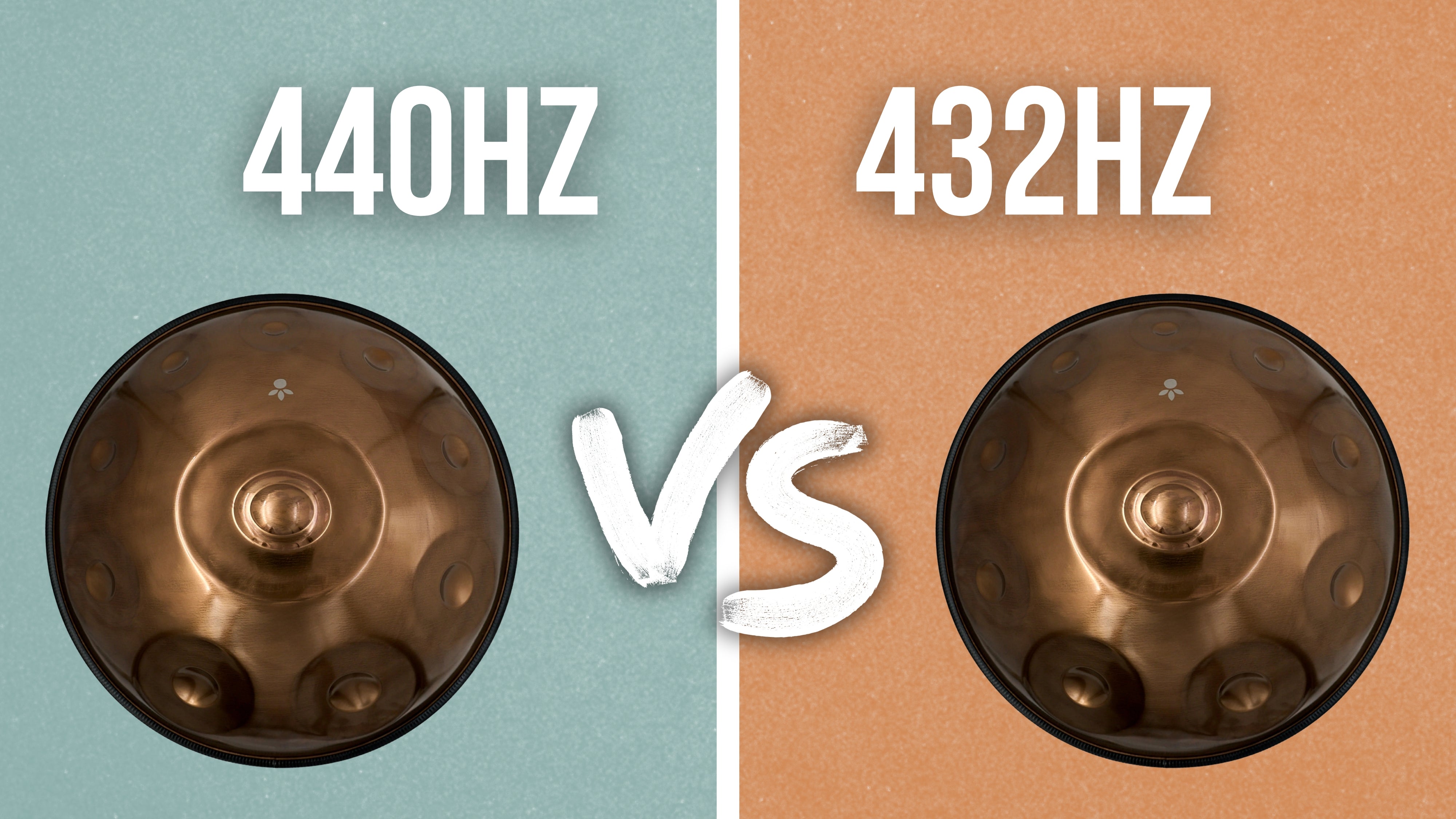
When buying a handpan, a question often arises: 440 Hz or 432 Hz?
Online, the topic sometimes seems like a choice between two worlds. In practice, however, it's much simpler – and much more helpful – to look at it musically : as a question of context , habit , instrument quality , and personal sound preference .
This article provides you with a clear, understandable and practical classification :
What do 440 and 432 Hz actually mean? How big is the difference really? And what's important when learning, playing together, and buying a handpan?
In short: 440 Hz and 432 Hz are two reference tunings (usually based on the note A ).
432 Hz is slightly lower than 440 Hz – the difference is audible , but small (about a third of a semitone).
For most beginners, 440 Hz is a very good starting point because it:
sounds familiar (that's how most music is tuned),
is compatible (lessons, playbacks, playing along),
and because many handpans are built to be particularly stable and balanced at 440 Hz .
432 Hz can also be useful , especially in certain setups (e.g. sound healing) or if you prefer exactly this sound character – the crucial thing is that the instrument is cleanly carried and sounds musically convincing.
An overview
Here you will find the basic questions and information about frequencies in the handpan.
"Hz" stands for Hertz and describes one number of oscillations per second .
When 440 Hz or 432 Hz is mentioned, it refers to the reference tone to which an instrument is oriented – usually the note A (often referred to as "concert pitch").
- A = 440 Hz means: The note A vibrates 440 times per second .
- A = 432 Hz means: The note A vibrates 432 times per second .
The difference between 440 and 432 Hz is relatively small (8 Hz for the reference tone A), musically corresponding to roughly 31 cents (about a third of a semitone). You can hear it – but it's not a different instrument , rather a slightly lower overall tuning.
Historically, there was no uniform reference point for a long time. Tunings were regional, practical, and dependent on ensembles. With increasing internationalization, a common reference tone became important.
Today, A = 440 Hz is the most common standard in many contexts:
- Lessons, workshops, learning materials
- Playbacks, songs, productions
- Interaction with other instruments
- Tuners, Apps, Plugins
Important: 440 Hz is a conventional standard , not a law of nature. Other references exist (e.g., 442 Hz in some orchestral contexts). In practice, the question is: does it work?
432 Hz is an alternative reference tuning in which the instrument is slightly lower overall.
Why is it being discussed so much?
- Sound aesthetics: Some perceive it as softer or warmer .
- A/B comparisons: A lower setting often appears "more pleasant", especially in direct comparisons.
- Internet myths: There are many claims about special effects – which are not reliably proven in this form.
If one takes a sober look at 432 Hz, what remains is: sound preference + context of use .
One point that is often underestimated: In the Western music world, we have been accustomed to ~440 Hz for decades. Most songs, instruments used in lessons, and even our collective singing lie within this reference range. Therefore, 440 Hz automatically sounds "normal" and musically harmonious to many ears.
432 Hz, on the other hand, might sound unusual to some at first. Not because it's wrong – but because it lies slightly outside the usual reference range. Some ears perceive this depth as slightly "different" or even a touch "off." Others experience something special precisely because of it: rounder , softer , sometimes even more moving .
And then comes the crucial practical point:
Not every instrument handles 432 Hz equally well. Many makers and production lines are optimized for 440 Hz – which is why many handpans sound more stable , sustained , and balanced at 440 Hz. At 432 Hz, the quality depends more on the workshop and the specific instrument. If the tuning isn't accurate , the sound can be soft, but also unstable – with a slightly "wobbly" quality , less clear overtones, and overall less precision.
Yes – often. But it is often misunderstood.
What one typically perceives
- 432 Hz sounds slightly deeper
- This often makes it feel warmer or softer.
- In solo play, it's often primarily a matter of taste.
Something that shouldn't be overestimated
- not "magical"
- not automatically "better"
- rarely the most important sound factor
With handpans, the following are often more crucial:
- Vocal stability
- Speech (how easily can a clear tone be achieved?)
- Balance of the tone fields
- Overtone spectrum and sustain
Key point: It's not the number that makes the sound – but a well-built instrument and the way you play it.
If you mainly play solo
Then the choice is often a question of sound preference :
Which reference feels coherent, pleasant, and inspiring to you?
If you want to play with others (lessons, jam sessions, ensembles)
Then compatibility is relevant. 440 Hz is usually the simplest standard here. 432 Hz works well if the environment is specifically designed for it.
If you're playing to tracks / electronic music
Here too, 440 Hz is often the simplest reference point, because most productions are based on it. 432 Hz is possible, but often requires additional adjustments.
432 Hz in sound therapy and sound healing
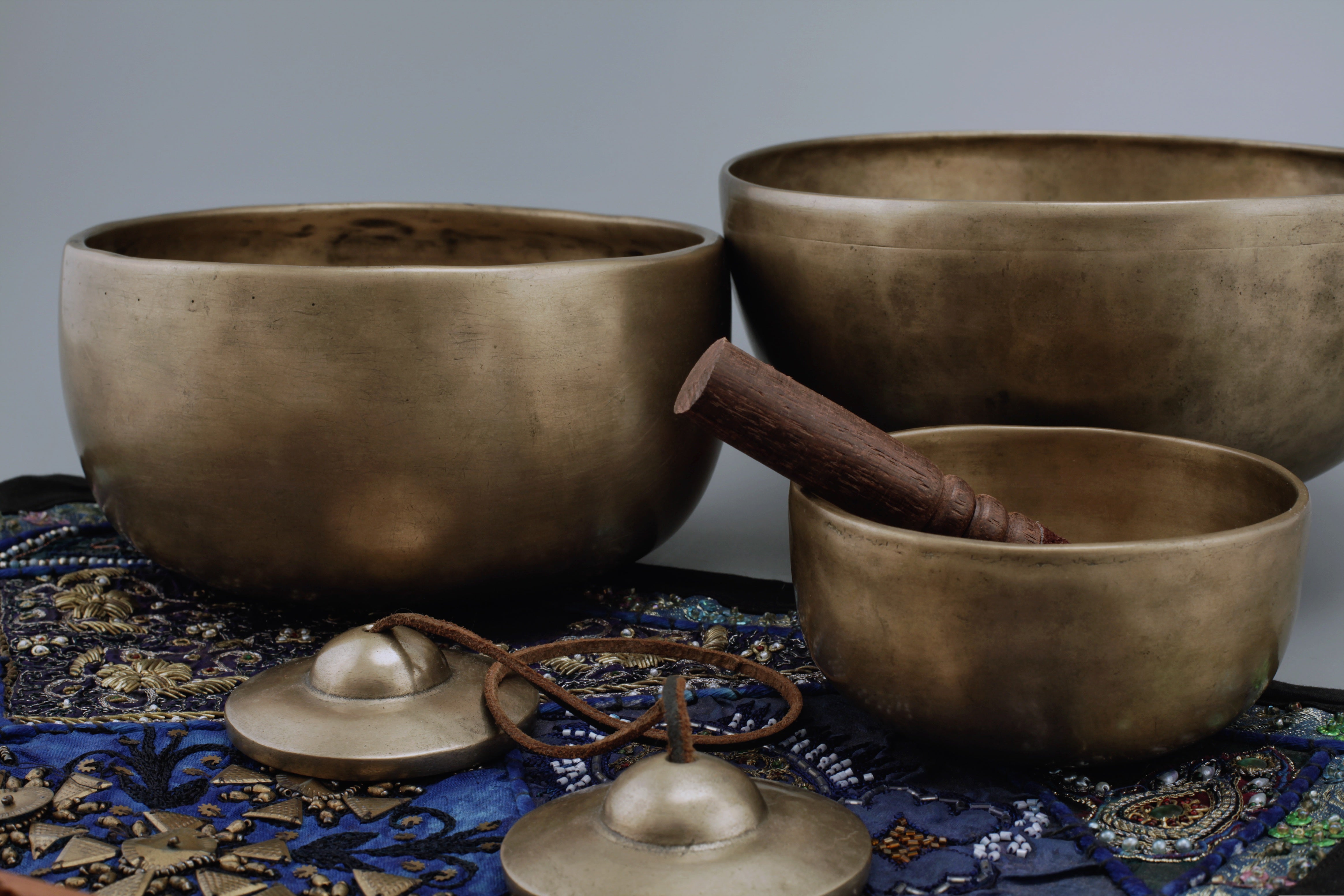
In the fields of sound therapy, sound healing, and meditation, 432 Hz is frequently used – less out of scientific necessity, but rather due to practice, tradition, and sound aesthetics . Many perceive the slightly lower reference frequency as softer and less "bright," which can work well in calm, breath-focused settings.
In practical terms, it's also worth noting that in sound healing contexts, several instruments are often combined (e.g., handpan, singing bowls, gongs, voice). If part of the setup is based on 432 Hz, the rest is frequently adjusted to prevent any feeling of intunement .
Our Sound Healing Series (432 Hz)
Because 432 Hz is frequently used in practice in the field of sound healing and sound therapy , we want to offer an uncompromisingly high-quality selection for this purpose.
We are currently developing a sound-healing series: high-quality handpans in 432 Hz, with carefully selected and finely tuned scales optimized for quiet sound work. The D Kurd 10 (432 Hz) is currently available. Further scales are already in development and will be added gradually.
What do we recommend for beginners?
If you want to learn handpan and are still unsure:
For most beginners, 440 Hz is the most sensible starting point – not only for compatibility reasons, but also for sonic reasons.
Why 440 Hz is often the best starting choice:
- Familiar sound: Most of the music we listen to is based on this reference range.
- Stable quality: Many handpans sound particularly balanced and resonant at 440 Hz because many makers/series are optimized for this frequency.
- Easy integration: Lessons, workshops, jam sessions, playbacks and other instruments usually fit together seamlessly.
432 Hz can be useful if…
- you want to consciously set up a setup for sound healing / meditative sound work
- your environment or instrument setup is also tuned to 432 Hz
- You have heard a specific instrument that sounds stable, balanced and convincing at 432 Hz – and you prefer exactly that sound.
Common misunderstandings
432 Hz is more natural
On the internet, 432 Hz is often presented as the "correct" or "natural" frequency – linked to statements like: "Earth's frequency," "in harmony with nature," "animals react to it," "measurably affects the body." The problem isn't so much that people describe such experiences – but that these are often presented as hard facts . There is no reliable, generally accepted evidence for these sweeping claims of efficacy.
This is easily explained in practice: music does indeed influence us – but primarily through playing style and context . A calm tempo, soft attacks, stable overtones, a suitable room, and harmonious dynamics can noticeably soothe the body. Whether the reference tone is 440 or 432 Hz often plays a significantly smaller role than one might think.
Therefore, the most sensible approach is: 432 Hz can feel very harmonious to some people – that's perfectly legitimate. However, it shouldn't be presented as a universal truth or a "scientifically proven" effect.
432 Hz sounds more pleasant, relaxed, or calm.
Many people actually find 432 Hz softer or warmer in comparison – this can be very pleasant. However, it's not guaranteed and depends heavily on several factors: instrument quality , tuning stability , overtones , dynamics (how softly or forcefully it's played), tempo , room acoustics, and volume . To some ears, 440 Hz even sounds more familiar and therefore more relaxing. Ultimately, what matters is not the number itself, but whether the instrument sounds stable , balanced, and musically convincing.
The entire handpan is 432 Hz.
"432-Hz handpan" does not mean that every note has 432 Hz.
The number refers to a reference tone (usually A). At 432 Hz, the instrument is tuned slightly lower overall , so that all notes remain in the same proportion to each other.
If "everything were 432 Hz", then every tone would indeed have to be the same – then there would be no melody, but only a single tone.
1111 Hz & other frequencies
A handpan is not tuned to "1111 Hz" . 1111 Hz is very high and does not correspond to any standard piano pitch in the standard tuning system – it lies between two pitches.
What you usually hear in videos is something else entirely: Such frequencies (1111 Hz, Solfeggio, etc.) are often added later as a quiet background tone (sine wave/drone) beneath the handpan music. Online, 1111 Hz is sometimes referred to as the "angel frequency"—in practice, it's primarily an additional layer of sound , not the tuning of the handpan itself.
Frequently Asked Questions
Can I play 432 Hz and 440 Hz together?
This usually sounds out of tune because the instruments are tuned differently. For playing together, all instruments should be based on the same fundamental frequency.
Is it possible to "retune" a handpan from 440 to 432?
Technically, retuning is possible, but it is complex and not without risk : Retuning must be done professionally and can change the balance, sustain, and overtones.
Is 432 Hz better for relaxation?
It's impossible to generalize – it varies greatly from person to person . Some find 432 Hz particularly pleasant, soft, or calming. Others barely notice the difference or find 440 Hz more familiar and therefore even more relaxing.
What's usually less important is the number itself, but rather the context : playing style, dynamics, tempo, space, volume, and the quality of the instrument. For learning progress, sound quality, and musical development, these factors are often significantly more important in practice than the reference tuning alone.
What about 442 Hz or other standards?
Yes, there are contexts (e.g., orchestras) where other references are common. For everyday use of the handpan, 440 Hz is usually the practical standard.
Conclusion: 440 vs. 432 Hz is a matter of context – not a matter of belief.
440 Hz and 432 Hz are two reference tunings . The difference is audible, but smaller than many discussions suggest.
Numerous claims circulate regarding the 432 Hz tuning – even suggesting "secret effects" or physical benefits. Such narratives are not reliably substantiated . Whether a tuning is perceived as "better" depends much more in practice on instrument quality , playing style , dynamics , the acoustics of the room , and individual perception .
For most beginners, 440 Hz is the obvious starting point – not only because of compatibility, but also because we in the Western music world are accustomed to this reference range and many instruments are sonically optimized for it. 432 Hz can be a sensible choice if it suits your setup – for example, in certain sound healing contexts or if you specifically prefer this sound character.
Ultimately, the following applies:
It's not the number that makes the sound – but a well-built instrument , a clean tuning , and the way you play and listen.
Further reading